Executive Command Center
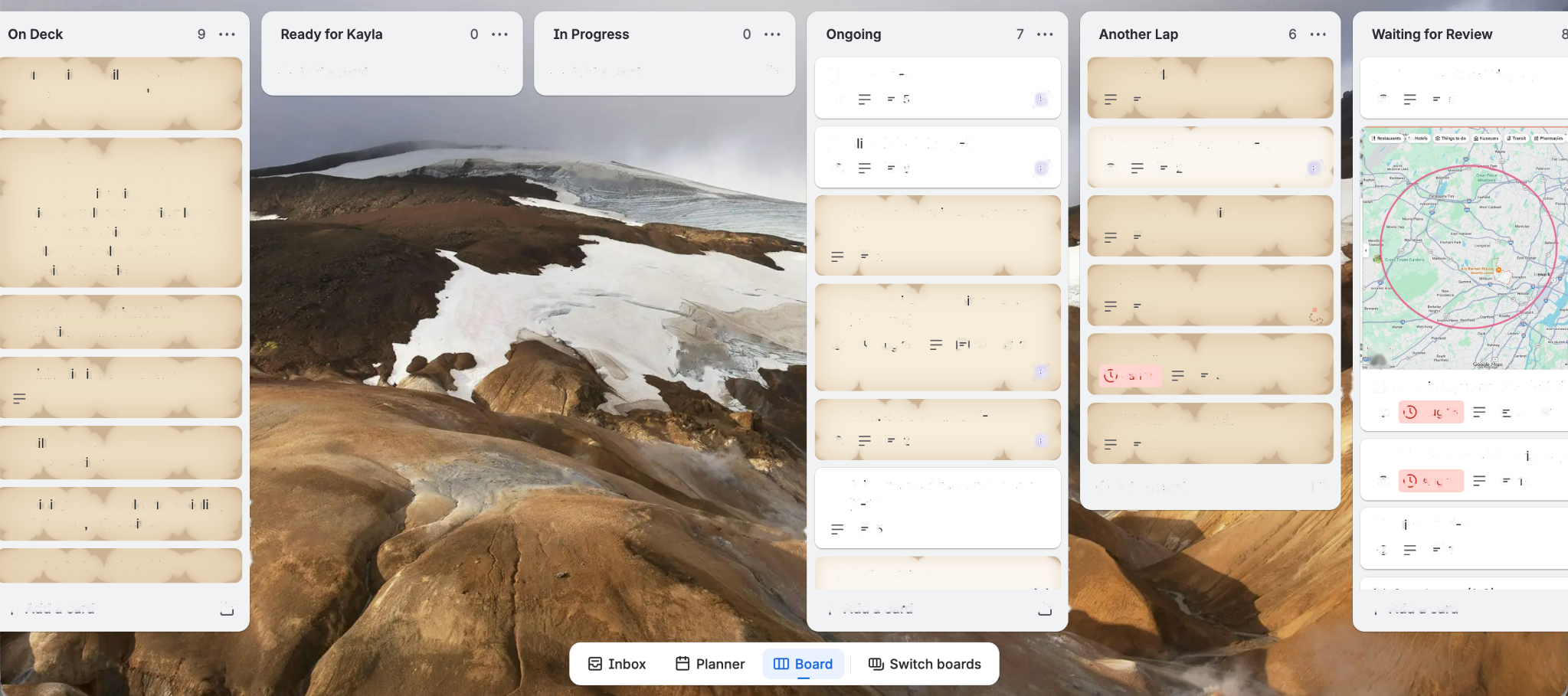
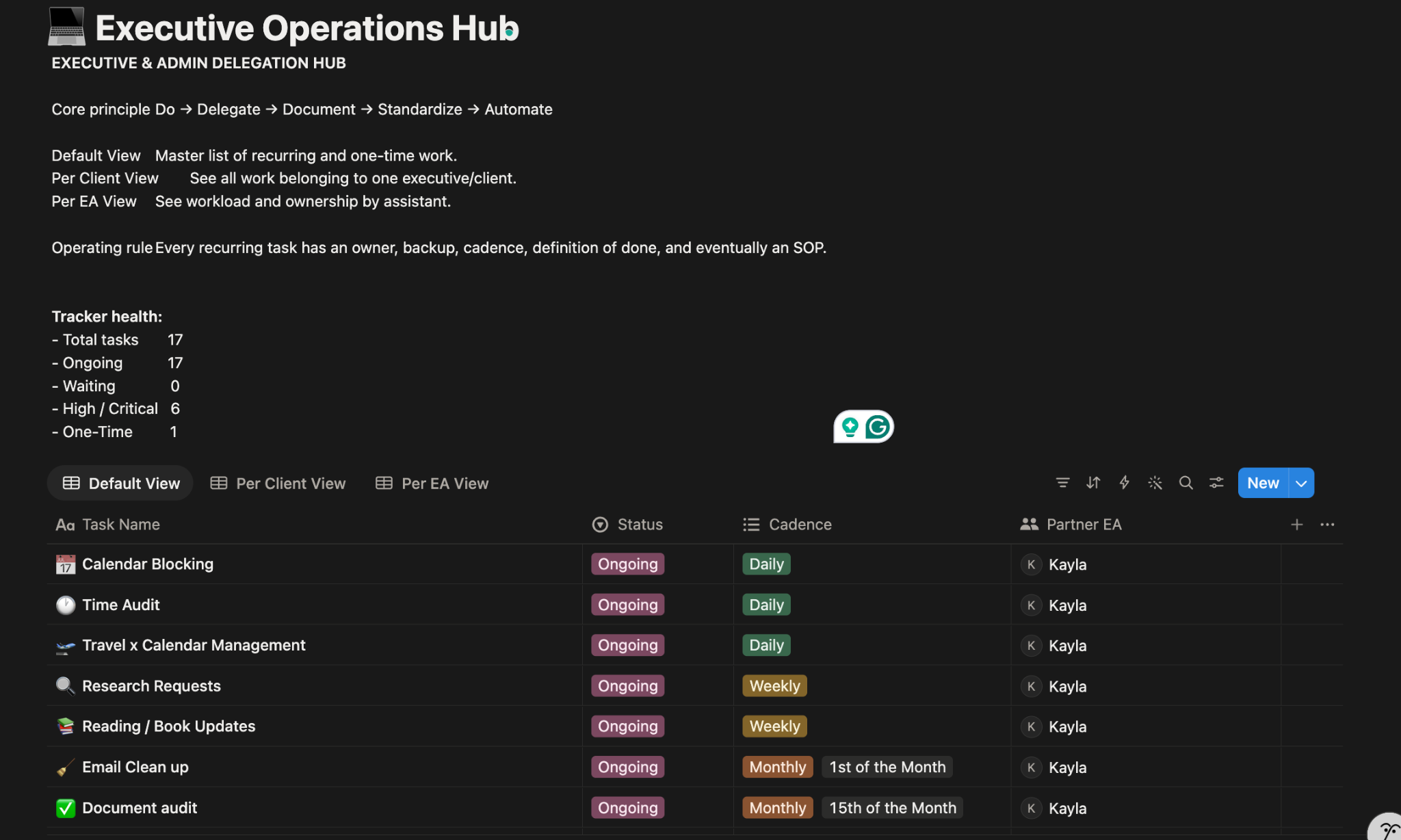
A recreated demonstration based on a Notion task-management system built using the Sam Corcos delegation approach. Ownership, priority and next actions become visible instead of living in memory or scattered messages.
I build the structure behind the work: clearer ownership, visible priorities, thoughtful executive support, documented processes and workflows that reduce unnecessary manual handoffs.
Explore the work →Improvement in on-time project completion
through clearer ownership, deadlines and visibility.
CAPTURE → CLARIFY → ASSIGN → EXECUTE → CLOSE
The portfolio recreates the architecture and decision-making behind systems I have built, without exposing previous employers' proprietary work.
A recreated demonstration based on a Notion task-management system built using the Sam Corcos delegation approach. Ownership, priority and next actions become visible instead of living in memory or scattered messages.
When a potential client submitted a form, the automation could route the request to the right workspace, create the work item, assign an owner and start the appropriate process.
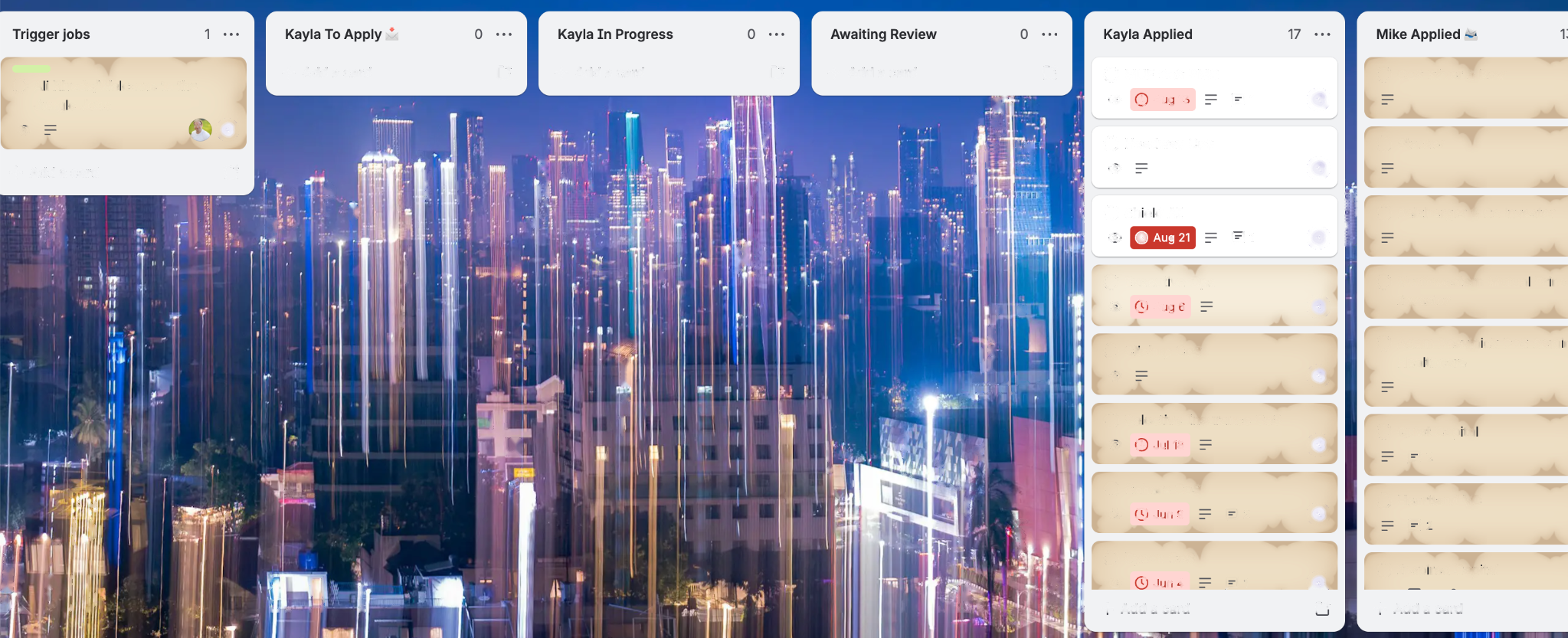
A fictionalized Monday.com-style board showing how automated client intake can become visible operational work.
A structured handover moves context from the outgoing owner to the next owner without relying on a long chain of messages.
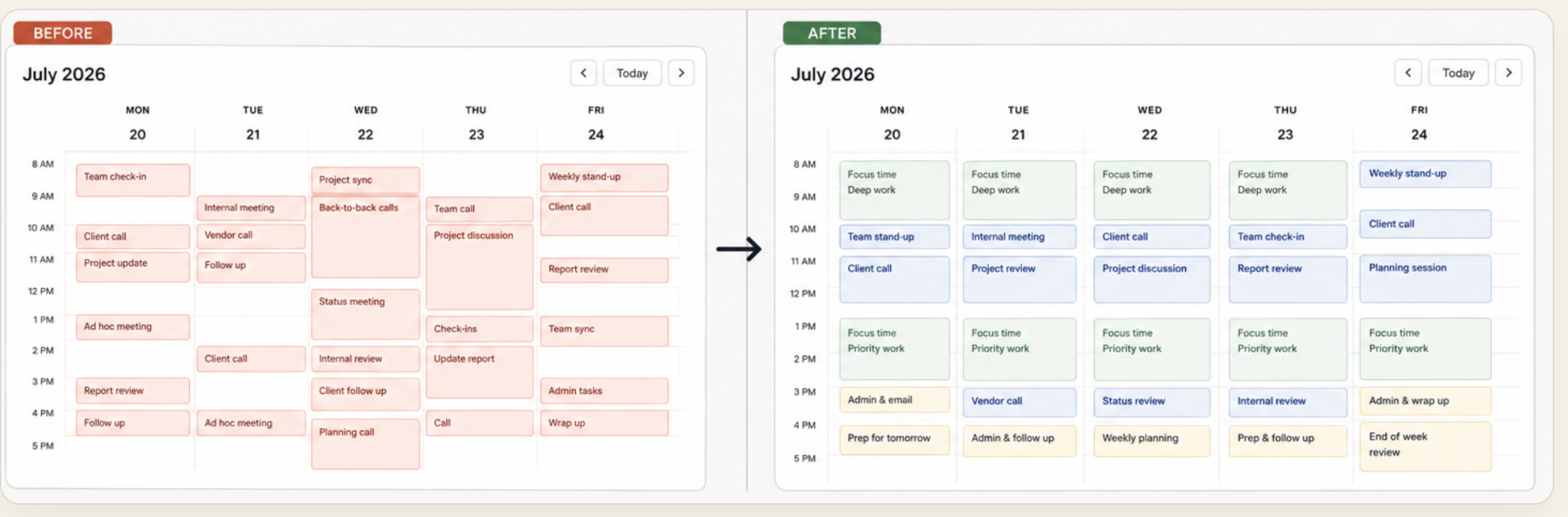
Priorities, meetings, preparation and focus time, organized intentionally.
The first step was to look at the calendar as a whole rather than treating each meeting as a separate item. I wanted to see where time was being fragmented, where meetings were competing with each other, and where important work had no room around it.
I grouped related commitments, reduced unnecessary switching, created space for preparation and follow-up, and protected blocks for focused work. The goal was not to make the calendar look empty. It was to make the available time work more intentionally.
A browser can become a second desk: dozens of tabs, half-finished research, work tools, reference pages and “I'll come back to this” links. I like turning that clutter into a workspace that makes sense at a glance.
Sometimes the productivity win is not another automation. It is making the information someone already uses easier to find, understand and return to.
The goal is a workspace where the next click is obvious and “Where did I put that?” becomes a much rarer question.
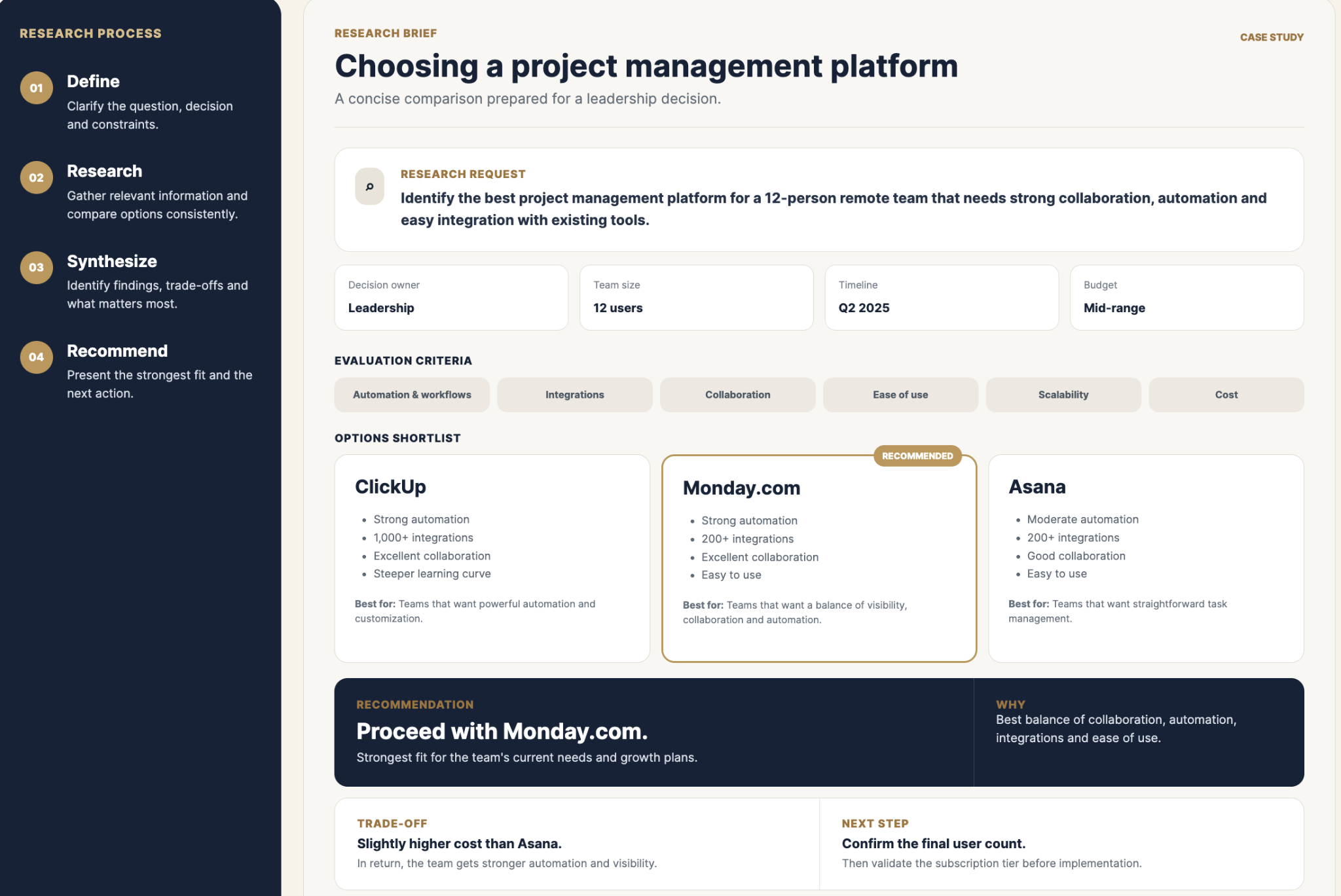
I turn research requests into concise briefs that help leaders compare options, understand trade-offs and make decisions.
A concise comparison prepared for a leadership decision.
Best for: Teams that want powerful automation and customization.
Best for: Teams that want a balance of visibility, collaboration and automation.
Best for: Teams that want straightforward task management.
Strongest fit for the team's current needs and growth plans.
Best balance of collaboration, automation, integrations and ease of use.
In return, the team gets stronger automation and visibility.
Then validate the subscription tier before implementation.
A recreated operations dashboard showing how candidate sourcing, progression and follow-up can be made visible. Candidate names and data are fictional.
The point is visibility: who is where, what happens next and what needs attention.
The tracker was not the magic. Visibility was. Once work had a clear owner, deadline and status, it became easier to see what needed attention before the deadline became an emergency.
A recreated client onboarding SOP based on the type of process documentation I have built.
A fictional client submits a form → the workflow routes the request → creates the task → assigns an owner → starts the process.
Five habits that shape how I support leaders and teams.
I look beyond the immediate task and ask what process produced it.
Good systems make it obvious who owns the next move.
If something must be remembered repeatedly, it probably needs a system.
A process is stronger when someone else can follow it.
Completion means the outcome is confirmed, not just that a task changed status.